Torque and cadence sensing adds value by improving assist control and ride feel.
The included display or control unit adds useful everyday value.
The bike has 10 or more gears, which adds useful drivetrain range.
The bike appears to be a recent or current model.
The release age is recent, which supports value if pricing is competitive.
65
Mixed longer-ride suitability
Range is above average for this type of e-bike.
Range is above average for this type of e-bike.
Battery capacity is strong compared with similar e-bikes.
Battery efficiency appears strong, which should help stretch range on longer rides.
The battery does not appear to be removable, which can make charging less flexible on longer days.
Charging time is average for this type of e-bike.
The display or control unit should make it easier to monitor assistance and battery use on longer rides.
Overview
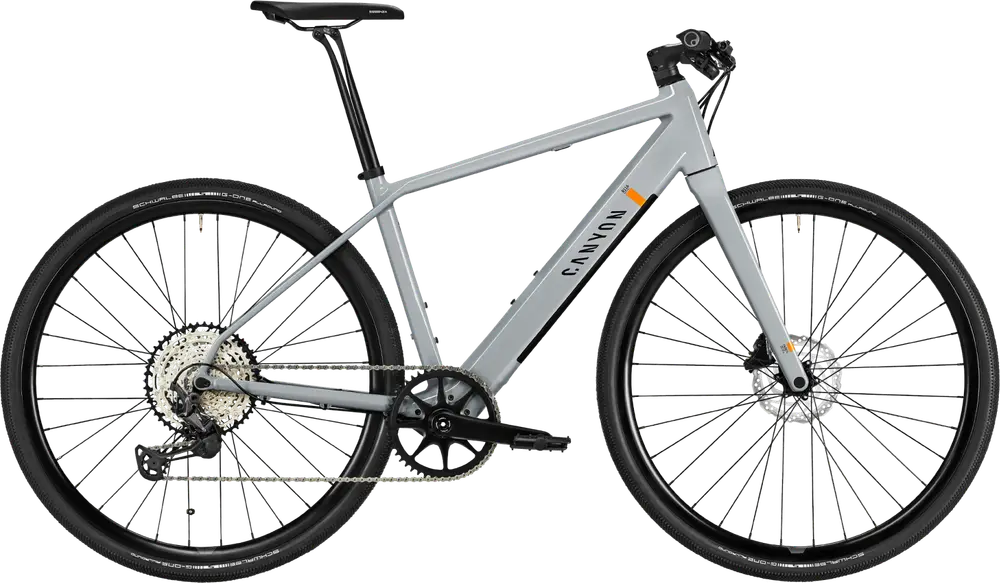
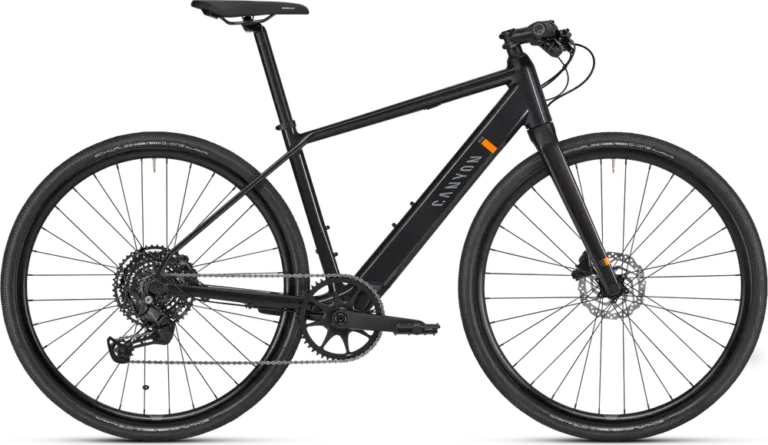
The Canyon Roadlite:ONfly 7 2025 is a powerful road e-bike designed for speed and efficiency on paved routes. Its 450W motor with 60Nm of torque delivers strong hill-climbing support and quick acceleration, making it feel lively and responsive. The bike makes good use of its 430Wh battery, offering a useful range for most commutes or rides, though the 3.5-hour charge time means you'll need to plan around charging. While the hydraulic disc brakes provide confident stopping power, the non-removable battery and slightly heavier weight may affect convenience for storage or transport. Best suited for riders who prioritize performance on roads over off-road versatility or frequent portability.
Best For
✓
This road e-bike should suit riders who prioritize strong hill climbing support and efficient battery use for longer rides on paved roads. Its high torque and excellent battery efficiency make it a solid choice for riders looking for responsive assistance without sacrificing range. The hydraulic disc brakes and strong power-to-weight ratio also make it a good fit for those who value confident braking and a natural ride feel. Riders who need to carry heavier loads or want a reliable e-bike for daily commuting or fitness rides may find this model particularly appealing.
Who Should Avoid It
×
Road riders prioritising the lightest possible assisted bike may want to compare lighter options, as this bike is heavy for a road e-bike and may affect the feel of the ride. Riders who need to remove the battery for charging may find charging less flexible, as the battery is not removable. While the bike offers strong hill climbing support and good range for a road e-bike, these trade-offs could be important for riders focused on weight and charging convenience.
Ownership considerations
These points highlight practical ownership factors such as maintenance, storage, charging, everyday
handling and bad-weather usability.
31
Some maintenance considerations
Weak
Chain drive is common and serviceable, but needs more cleaning and lubrication than a belt drive.
Chain drive is common and serviceable, but needs more cleaning and lubrication than a belt drive.
Hydraulic disc brakes are a strong everyday setup, though they may need occasional specialist servicing.
Tyres are listed, but there is no clear puncture-protection signal.
The aluminium frame material is practical for everyday use and general maintenance.
A higher number of gears can add drivetrain complexity.
0
Limited storage practicality
Poor
The frame does not appear to fold, so storage will depend more on size and weight.
The frame does not appear to fold, so storage will depend more on size and weight.
The bike is heavier than average for its type, which may make storage and moving it harder.
18
Harder to lift
Poor
The bike is heavier than average for its type, so it may not be especially easy to lift.
The bike is heavier than average for its type, so it may not be especially easy to lift.
The listed weight is 15.7 kg.
The aluminium frame material is a practical lightweight choice for many e-bikes.
The road bike format is usually more manageable to lift than bulkier e-bike types.
The larger-than-average battery capacity may add weight.
14
No removable battery advantage
Poor
The battery does not appear to be removable, so the whole bike may need to be near a charging point.
The battery does not appear to be removable, so the whole bike may need to be near a charging point.
Because the bike is heavier than average, removing the battery can make handling and charging more convenient.
The larger battery capacity makes removable charging more useful for day-to-day convenience.
23
Very slow charging speed
Poor
Charging time is average for this type of e-bike.
Charging time is average for this type of e-bike.
The quoted charging time is long in absolute terms.
100
Excellent battery efficiency
Excellent
The bike appears to get strong range from its battery size.
The bike appears to get strong range from its battery size.
The calculated range per battery unit is 174.42.
51
Decent everyday equipment
Mixed
The included display or control unit adds useful ride information for daily use.
The included display or control unit adds useful ride information for daily use.
Multiple ride modes should help adapt the bike to different everyday journeys.
Hydraulic disc brakes are useful equipment for confident daily riding.
Payload capacity is average or better, which helps with bags, shopping or daily kit.
27
Limited bad-weather practicality
Poor
Hydraulic disc brakes should provide better control and confidence in wet conditions.
Hydraulic disc brakes should provide better control and confidence in wet conditions.
Built-in lights are not listed, so bad-weather visibility may depend on extra accessories.
The road bike format may be less practical in poor weather, depending on tyres and equipment.
The bike weight may help it feel more planted in wet or windy conditions.
The wheel size should be workable for regular poor-weather riding, depending on tyre choice.
Frame material is listed as aluminium, which gives useful durability and maintenance context.
34
Some family utility limitations
Weak
The road bike format is usually less suited to family or utility tasks.
The road bike format is usually less suited to family or utility tasks.
Payload capacity is above average for this type of e-bike.
The listed maximum payload is practical for lighter utility use.
The listed maximum payload is 130 kg.
Hydraulic disc brakes are useful when carrying children, shopping or heavier loads.
Battery capacity is strong compared with similar e-bikes, supporting utility trips.
Range is average or better compared with similar e-bikes, which supports practical daily use.
Same powerSame rangeSame battery1 kg heavier1 fewer gears
Click the tab to load better value options.
Click the tab to load closest price options.
Click the tab to load longer range options.
Click the tab to load higher power options.
Potential limitations
Areas where this e-bike may be less strong based on its specs and comparisons.
0
Limited downhill control
No suspension may reduce control and comfort on rough or steeper descents.
No suspension may reduce control and comfort on rough or steeper descents.
Hydraulic disc brakes should provide controlled braking on descents.
0
Not very off-road capable
The road bike design is not well suited to off-road terrain.
The road bike design is not well suited to off-road terrain.
No suspension limits comfort and control on rough off-road terrain.
Hydraulic disc brakes should help with control on loose or uneven terrain.
Torque is strong compared with similar e-bikes, which should help on loose or uneven climbs.
The 700c wheel size may suit gravel or light mixed-surface riding, depending on tyre setup.
0
Limited rough-road comfort
No suspension may make rough roads, potholes and uneven paths feel harsher.
No suspension may make rough roads, potholes and uneven paths feel harsher.
The wheel size should be workable for rough roads and everyday uneven surfaces.
The road bike format may feel harsher on rough roads unless tyre volume is generous.
Hydraulic disc brakes add useful control on rougher routes.
The bike weight may help it feel more planted over rough surfaces.
Frame material is listed as aluminium, which gives useful comfort and build context.
0
Limited technical trail control
The road bike format is not well suited to technical trail control.
The road bike format is not well suited to technical trail control.
No suspension is a major limitation for technical trail control.
Hydraulic disc brakes should provide the control needed for technical trail riding.
Torque is high compared with similar e-bikes, which should help technical climbing and low-speed control.
Torque-sensing assistance should help with smoother control on technical sections.
The bike is heavier than average for its type, which may affect technical handling.
Power-to-weight is strong, which should help with technical sections that need quick support.
Multiple ride modes should help the rider manage assistance on technical trails.
0
Limited storage practicality
The frame does not appear to fold, so storage will depend more on size and weight.
The frame does not appear to fold, so storage will depend more on size and weight.
The bike is heavier than average for its type, which may make storage and moving it harder.
0
Limited trail control
The road bike format is less suited to trail control.
The road bike format is less suited to trail control.
No suspension may limit control and comfort on rougher trails.
Hydraulic disc brakes should improve control on loose or uneven trails.
Torque is strong compared with similar e-bikes, which should help low-speed trail control.
Torque-sensing assistance should help with smoother power control on trails.
Power-to-weight is strong, which should help when controlling the bike over uneven trail sections.
11
No built-in light advantage
Built-in lights are not listed, so separate lights may be needed.
Built-in lights are not listed, so separate lights may be needed.
The display or control unit may make light and ride-status management easier.
Battery capacity is average or better for this type of e-bike, supporting everyday powered accessories.
14
No removable battery advantage
The battery does not appear to be removable, so the whole bike may need to be near a charging point.
The battery does not appear to be removable, so the whole bike may need to be near a charging point.
Because the bike is heavier than average, removing the battery can make handling and charging more convenient.
The larger battery capacity makes removable charging more useful for day-to-day convenience.
E-system & battery comparison
Motor Power
450 watts
▲ 179 W above average
Motor Torque
60 Nm
▲ 10 Nm above average
Power-to-weight
28.66 W/kg
▲ 3.1 W/kg above average
Battery Capacity
430 Wh
▲ 96 Wh above average
Claimed Max Range
75 miles
▲ 10 miles above average
Charge Time
3h 30m
▼ 4.7 mins faster than average
Sensor Type
Torque and Cadence Sensor
Removable Battery
No
Motor Name
Fazua Ride 60
This road e-bike offers a strong and responsive motor assistance that should feel natural and efficient, with a balance between power and weight that supports a ride feel closer to a traditional road bike. Against similar e-bikes, the motor support and torque should compare well, offering strong climbing and acceleration without feeling overly heavy-handed. The motor should provide solid support on climbs and during higher-effort riding, though the bike's weight may make starts and low-speed riding feel more reliant on the motor's assistance. With torque and cadence sensing, the assistance should feel smooth and predictable, allowing for controlled power delivery across different ride modes. Riders looking for a road e-bike that feels efficient, responsive, and capable on climbs should find this motor setup well-suited to their needs.
This explanation is based on the bike’s motor power, torque, battery capacity, claimed range, charging
time, sensor type and how those figures compare with similar e-bikes in our database.
eBike FAQs
Is this bike suitable for long rides on paved roads?
This road e-bike is well-suited for long rides on paved roads, thanks to its 450W motor and 60Nm of torque, which provide strong hill-climbing support and smooth acceleration. With a range of 75 miles on a single charge, it should handle most commutes or longer rides comfortably. However, the non-removable battery and heavier weight may make it less convenient for frequent transport or storage, so plan accordingly if you need to charge it away from home.
How does the motor feel when climbing hills?
The motor provides strong support when climbing hills, thanks to its 450W power and 60Nm of torque, which should make steep inclines feel more manageable. You'll likely notice a smooth and responsive assist that complements your pedaling effort, though the bike's weight may slightly affect how light it feels when accelerating uphill.
Does the bike still feel like a traditional road bike with the motor assistance?
The Canyon Roadlite:ONfly 7 2025 retains a traditional road bike feel despite the motor assistance, thanks to its lightweight frame and responsive handling. The motor adds a noticeable boost, especially when accelerating or climbing, but doesn't overwhelm the natural riding experience. Riders used to traditional road bikes should find the balance between motor support and manual effort intuitive, making it a great choice for those who want a bit of help without losing the essence of a road bike ride.
Is the battery large enough for everyday commuting or longer rides?
The 430Wh battery should provide a solid range for most everyday commutes or longer rides on paved roads, especially given the bike's efficient use of power. However, the non-removable battery means you'll need to plan charging around your schedule, as you can't easily take the battery with you. For riders who prioritize performance and don't need to charge the battery away from home, this should be sufficient for most needs.
How practical is this bike for daily use, especially considering its weight?
This bike is reasonably practical for daily use, though its weight of 15.7 kg may make it a bit heavier to handle when lifting or carrying, especially if you need to store it indoors. The non-removable battery means you'll need to charge it near a power source, which could be a minor inconvenience. However, the motor's strong hill-climbing support and above-average range of 75 miles make it a solid choice for regular commutes or paved-road riding.
What are the main compromises of this bike compared to similar e-bikes?
Compared to similar e-bikes, this model sacrifices some convenience due to its non-removable battery, which means you'll need to charge the whole bike near a power source. It's also heavier than average for a road e-bike, which might make it slightly less easy to lift or carry. While the charging time is average for this type of bike, it's still something to consider if you need to recharge quickly. These factors are balanced by its strong performance, efficient range, and powerful motor, making it a good choice for riders focused on speed and hill climbing on paved roads.
Is this bike good value for the price compared with similar e-bikes?
The Canyon Roadlite:ONfly 7 2025 offers strong performance for the price, especially with its high motor power and efficient battery range. While it's on the heavier side for a road e-bike, the 450W motor and 60Nm of torque provide excellent hill-climbing support and acceleration, making it a capable choice for spirited rides. However, the non-removable battery and average charging time may affect convenience for some riders, so it's best suited for those prioritizing performance over portability or quick charging.
How does the charging time affect the overall ownership experience?
The 3.5-hour charge time means you'll need to plan your rides around when you can recharge, especially if you're using the bike frequently. While this isn't unusually slow for a road e-bike, it may be a consideration if you need to top up quickly between rides. The non-removable battery also means you can't charge it separately from the bike, which could be inconvenient if you're away from a charging point for extended periods.
eBike Overview
eBike Type: Road Bike
The style of riding intended for this bike
Released:
2025
The bike was released 1 years ago
Screen
FAZUA Control Hub
Lights Included
No
Weight (inc battery): 15.7 kg
The website average for electric bikes is
22.99 kg.
This electric bike is 7.3 kg under the average. Total bike weight may vary depending on frame size.
Sizing & Geometry
Min / Max Rider Height
S: ≤172 cm, M: 172–182 cm, L: 182–192 cm, XL: ≥192 cm
Folded Dimensions
Unknown
Wheel & Tire Details
Wheelset Name
Alexrims GX 26 P double-wall aluminium rims built on a Shimano TC 500 thru-axle front hub (15 x 100 mm) and Shimano RS 470 rear hub (12 x 142 mm)