Torque-sensing assistance adds value because it usually feels more natural and refined.
The included display or control unit adds useful everyday value.
Front and rear suspension adds component value, especially for comfort or off-road use.
The bike has 10 or more gears, which adds useful drivetrain range.
The bike appears to be a recent or current model.
The release age is recent, which supports value if pricing is competitive.
76
Good braking confidence
Hydraulic disc brakes should provide strong and controlled stopping power.
75
Good acceleration support
Motor power is high compared with similar e-bikes.
Motor power is high compared with similar e-bikes.
Torque is average for this type of e-bike.
Power-to-weight is high compared with similar e-bikes.
Torque-sensing assistance should make the motor response feel more natural.
The calculated power-to-weight score is 25.1.
Overview
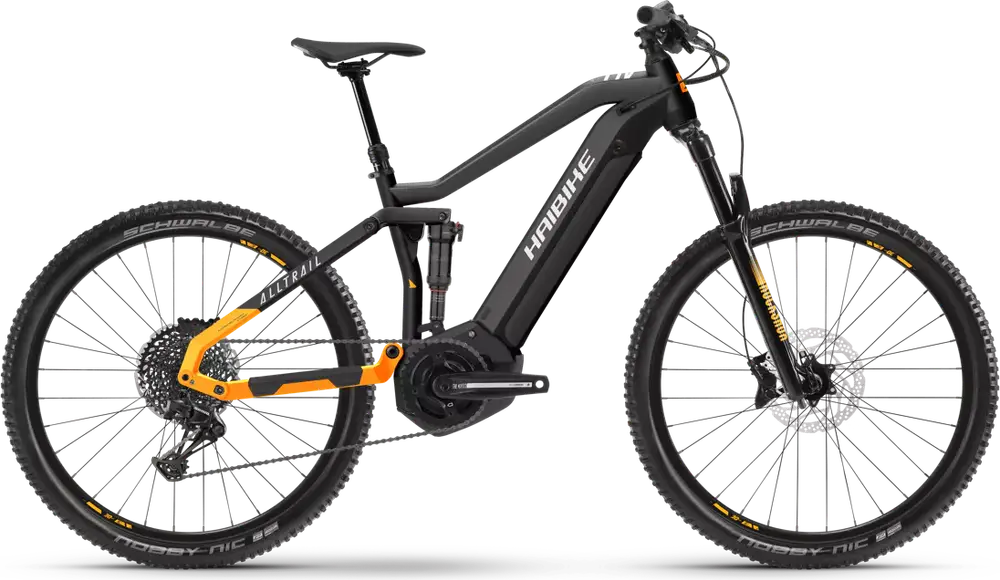
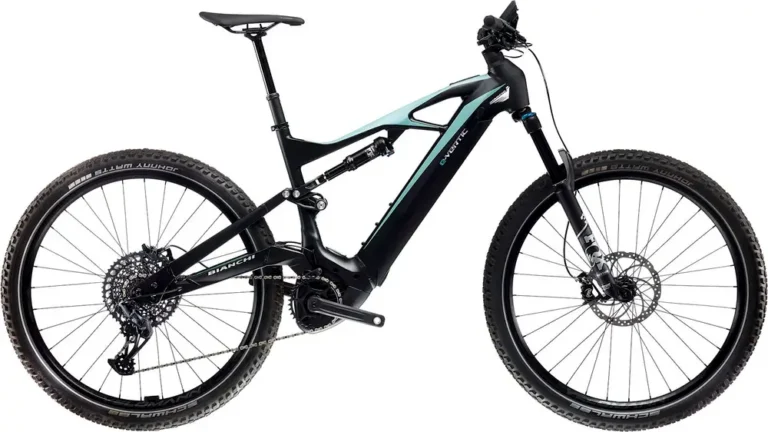
The Haibike AllTrail 6 2024 is a mountain bike built for trail riding and rough terrain, offering a strong balance of power and control. With a 600W motor and 75Nm of torque, it provides smooth support for climbing hills and navigating uneven paths, while front and rear suspension ensures a comfortable ride over rough surfaces. Its 630Wh battery offers a reasonable range for most adventures, though longer rides may require careful planning. The bike feels lively for its weight, but its heavier build makes it less convenient to lift, and the charging time is on the slower side for an e-bike of this type.
Best For
✓
This mountain e-bike should suit riders who enjoy trail riding and want a balance of power, comfort and control on rougher terrain. Its high power-to-weight ratio and strong motor make it responsive and capable for off-road trails, while the front and rear suspension provide comfort on uneven surfaces. Riders who value confident braking and natural assistance that responds to effort will likely appreciate its performance. It makes most sense for trail riders looking for a reliable and well-rounded mountain e-bike with good value for money.
Who Should Avoid It
×
Riders who prioritise extended range for multi-day off-road adventures may want to compare alternatives, as the Haibike AllTrail 6 2024 offers a range that is below average for similar mountain e-bikes. Riders who frequently need to recharge quickly may also find the charging time to be a drawback when next to rivals with faster charging options. However, the bike still suits those who value strong trail control, responsive assistance and excellent off-road capability for shorter to medium-length rides.
Ownership considerations
These points highlight practical ownership factors such as maintenance, storage, charging, everyday
handling and bad-weather usability.
19
More maintenance likely
Poor
Chain drive is common and serviceable, but needs more cleaning and lubrication than a belt drive.
Chain drive is common and serviceable, but needs more cleaning and lubrication than a belt drive.
Hydraulic disc brakes are a strong everyday setup, though they may need occasional specialist servicing.
Tyres are listed, but there is no clear puncture-protection signal.
The aluminium frame material is practical for everyday use and general maintenance.
The mountain bike format may involve more wear from rougher riding and more complex components.
A higher number of gears can add drivetrain complexity.
Front and rear suspension can add maintenance complexity.
0
Limited storage practicality
Poor
The frame does not appear to fold, so storage will depend more on size and weight.
The frame does not appear to fold, so storage will depend more on size and weight.
A full-suspension mountain bike format is usually bulkier and harder to store indoors.
15
Harder to lift
Poor
The bike weight is average for this type of e-bike.
The bike weight is average for this type of e-bike.
The listed weight is 23.9 kg.
The aluminium frame material is a practical lightweight choice for many e-bikes.
The mountain bike format can be bulkier and harder to lift than simpler urban e-bikes.
The 29-inch wheel size can make the bike more awkward to lift or store.
6
No removable battery advantage
Poor
This bike type can be larger or heavier, so a removable battery adds useful charging flexibility.
23
Very slow charging speed
Poor
Charging time is average for this type of e-bike.
Charging time is average for this type of e-bike.
The quoted charging time is long in absolute terms.
29
Low battery efficiency
Poor
Battery efficiency appears average for this type of e-bike.
Battery efficiency appears average for this type of e-bike.
The calculated range per battery unit is 71.43.
40
Some everyday equipment gaps
Weak
The included display or control unit adds useful ride information for daily use.
The included display or control unit adds useful ride information for daily use.
Hydraulic disc brakes are useful equipment for confident daily riding.
Payload capacity is average or better, which helps with bags, shopping or daily kit.
53
Mixed bad-weather practicality
Mixed
Hydraulic disc brakes should provide better control and confidence in wet conditions.
Hydraulic disc brakes should provide better control and confidence in wet conditions.
Built-in lights are not listed, so bad-weather visibility may depend on extra accessories.
The mountain bike format should offer useful control on rough or slippery surfaces.
Suspension can help control and comfort on rough, wet or uneven surfaces.
The bike weight may help it feel more planted in wet or windy conditions.
The wheel size should be workable for regular poor-weather riding, depending on tyre choice.
Frame material is listed as aluminium, which gives useful durability and maintenance context.
23
Limited family utility practicality
Poor
Payload capacity is average for this type of e-bike.
Payload capacity is average for this type of e-bike.
The listed maximum payload is practical for lighter utility use.
The listed maximum payload is 135 kg.
Hydraulic disc brakes are useful when carrying children, shopping or heavier loads.
Same power23 miles more range120 Wh more battery1 kg heavierSame gears
Click the tab to load better value options.
Click the tab to load closest price options.
Click the tab to load longer range options.
Click the tab to load higher power options.
Potential limitations
Areas where this e-bike may be less strong based on its specs and comparisons.
0
Limited commuting practicality
The mountain bike format is less commuting-focused and may be less efficient for daily urban use.
The mountain bike format is less commuting-focused and may be less efficient for daily urban use.
Range is low compared with similar e-bikes, which may limit commuting flexibility.
Charging time is average or better, which is useful for regular commuting.
Built-in lights are not listed, so commuting equipment may need adding.
The display or control unit should make it easier to monitor assist level and battery use.
Hydraulic disc brakes are a strong practical feature for daily riding.
Payload capacity is average for this type of e-bike.
Front and rear suspension can add weight and complexity for normal commuting.
0
Limited storage practicality
The frame does not appear to fold, so storage will depend more on size and weight.
The frame does not appear to fold, so storage will depend more on size and weight.
A full-suspension mountain bike format is usually bulkier and harder to store indoors.
6
No removable battery advantage
This bike type can be larger or heavier, so a removable battery adds useful charging flexibility.
11
No built-in light advantage
Built-in lights are not listed, so separate lights may be needed.
Built-in lights are not listed, so separate lights may be needed.
The display or control unit may make light and ride-status management easier.
Battery capacity is average or better for this type of e-bike, supporting everyday powered accessories.
15
Harder to lift
The bike weight is average for this type of e-bike.
The bike weight is average for this type of e-bike.
The listed weight is 23.9 kg.
The aluminium frame material is a practical lightweight choice for many e-bikes.
The mountain bike format can be bulkier and harder to lift than simpler urban e-bikes.
The 29-inch wheel size can make the bike more awkward to lift or store.
19
More maintenance likely
Chain drive is common and serviceable, but needs more cleaning and lubrication than a belt drive.
Chain drive is common and serviceable, but needs more cleaning and lubrication than a belt drive.
Hydraulic disc brakes are a strong everyday setup, though they may need occasional specialist servicing.
Tyres are listed, but there is no clear puncture-protection signal.
The aluminium frame material is practical for everyday use and general maintenance.
The mountain bike format may involve more wear from rougher riding and more complex components.
A higher number of gears can add drivetrain complexity.
Front and rear suspension can add maintenance complexity.
20
Limited longer-ride suitability
Range is low compared with similar e-bikes, which may limit longer rides.
Range is low compared with similar e-bikes, which may limit longer rides.
Battery capacity is average for this type of e-bike.
Battery efficiency appears broadly average.
Charging time is average for this type of e-bike.
The display or control unit should make it easier to monitor assistance and battery use on longer rides.
23
Very slow charging speed
Charging time is average for this type of e-bike.
Charging time is average for this type of e-bike.
The quoted charging time is long in absolute terms.
E-system & battery comparison
Motor Power
600 watts
▲ 160 W above average
Motor Torque
75 Nm
▼ 3.5 Nm below average
Power-to-weight
25.10 W/kg
▲ 4.7 W/kg above average
Battery Capacity
630 Wh
▼ 0.9 Wh below average
Claimed Max Range
45 miles
▼ 16 miles below average
Charge Time
5h
▼ 15 mins faster than average
Sensor Type
Torque Sensor
Motor Name
Yamaha PW-S 2
This mountain e-bike offers a strong motor output for its category, with assistance that should feel lively and responsive on trails. Next to similar models, its power-to-weight balance and torque-sensing system should make the assistance feel more natural and proportional to rider effort, especially when climbing or navigating rough terrain. The motor support should provide solid climbing assistance and help with acceleration, though it may not be the most refined in terms of power delivery compared to some competitors. With a torque sensor, riders can expect smooth and controlled assistance that adapts to their pedaling effort, and the motor setup is likely to suit those looking for a capable trail bike that balances performance with manageable weight.
This explanation is based on the bike’s motor power, torque, battery capacity, claimed range, charging
time, sensor type and how those figures compare with similar e-bikes in our database.
eBike FAQs
Is this bike suitable for long off-road rides?
The Haibike AllTrail 6 2024 is well-suited for off-road trails, with a 600W motor and 75Nm of torque providing strong support for climbing and navigating rough terrain. Front and rear suspension helps keep the ride comfortable over uneven surfaces, making it a solid choice for trail riding. However, its 45-mile range may require careful planning for longer rides, and the average battery efficiency means you might need to recharge more frequently on extended adventures.
How does the motor perform on steep climbs?
The motor should handle steep climbs effectively, thanks to its 600W power and 75Nm torque, which are above average for similar mountain e-bikes. The power-to-weight ratio is also above average, which helps with climbing performance. However, the battery efficiency is average, so you may need to plan for more frequent charging on long climbs or rough terrain.
Does the suspension system handle rough trails well?
The Haibike AllTrail 6 2024 is designed for off-road use, and its front and rear suspension should handle rough trails reasonably well, improving comfort on uneven surfaces. The suspension, combined with 29-inch tires, should help absorb shocks and maintain control on rough terrain. However, it's important to note that the suspension is not specifically tuned for extreme trail conditions, so it may not be the best choice for very technical or high-impact trails.
Is the battery capacity enough for multi-day adventures?
The battery capacity of 630 watt-hours should provide enough power for a single day of riding, but it may not be sufficient for multi-day adventures without additional charging solutions. With a range of 45 miles, you'll likely need to plan for charging stops or carry spare batteries if you're planning extended trips. This is below average for similar mountain e-bikes, so riders looking for long-range capabilities may want to consider models with larger battery options.
How does the power-to-weight ratio affect the riding experience?
A higher power-to-weight ratio means the bike can accelerate more quickly and handle steep climbs with greater ease, which is especially useful on rough trails. This bike's power-to-weight ratio is above average for similar mountain e-bikes, so you can expect strong performance when climbing or navigating challenging terrain. However, the motor's power delivery may feel less refined compared to some competitors, which could affect how smoothly the assistance feels during rides.
What are the main compromises of this bike compared to others?
Compared to similar mountain e-bikes, this model has a slightly lower range, which may require more frequent charging on longer rides. However, it compensates with a strong power-to-weight ratio and above-average motor power, making it effective for climbing and trail control. The bike also lacks a removable battery, which could be a minor inconvenience for charging, and its weight makes it slightly harder to lift or carry when needed.
Is this bike good value for the price?
This bike offers a good balance of performance and price for a mountain e-bike. The motor power and power-to-weight ratio are above average, which should provide strong performance on trails and climbs. While the range is slightly below average for similar e-bikes, the price is favourable, making it a competitive option for those prioritizing power and off-road capability over extended range.
How practical is this bike for everyday off-road use?
This bike is quite practical for everyday off-road use, thanks to its mountain bike design, front and rear suspension, and hydraulic disc brakes, which provide confident stopping power on rough terrain. The 29-inch wheels and Schwalbe Nobby Nic Evo tires are well-suited for trails and uneven surfaces, making it a solid choice for regular off-road riding. However, it's less focused on commuting efficiency, so if you're primarily looking for a daily urban bike, you may find some compromises in that area.
eBike Overview
eBike Type: Mountain Bike
The style of riding intended for this bike
Released:
2024
The bike was released 2 years ago
Screen
Yamaha Side Switch
Lights Included
No
Weight (inc battery): 23.9 kg
The website average for electric bikes is
22.99 kg.
This electric bike is 0.90 kg over the average. Total bike weight may vary depending on frame size.
Sizing & Geometry
Min / Max Rider Height
S: 160–170 cm, M: 168–178 cm, L: 175–185 cm, XL: 183–195 cm
Folded Dimensions
Unknown
Wheel & Tire Details
Wheelset Name
WTB ST i 35 TCS double-wall aluminium rims laced to Shimano MT 400-B/MT 410 hubs
Wheelset Size
29 inch
Tires
Schwalbe Nobby Nic Evo SnakeSkin 65-622
Frame Info
Frame Material
Aluminium
Suspension Type
Front and Rear suspension
Foldable Frame
No
Max Payload
135 kg (297.6 lbs)
Drivechain Details
Groupset details
SX Eagle
Drivechain type
Chain drive
Shifters
Shimano Deore M 6100 Rapidfire trigger switch
Amount of gears
12 Gears
Rear Derailleur
Shimano Deore M 6100 12-speed Shadow Plus
Front Derailleur
None
Cassette
Shimano M 6100 12-speed with a 10-51 T gear range
Cranks
Haibike Components The Crank ++ forged aluminium arms
Chain
Shimano CN-M 6100
Bottom Bracket
Integrated motor axle (the bottom bracket assembly is housed internally within the Yamaha PW-S 2 mid-drive motor casing)